World Cup Wistfulness
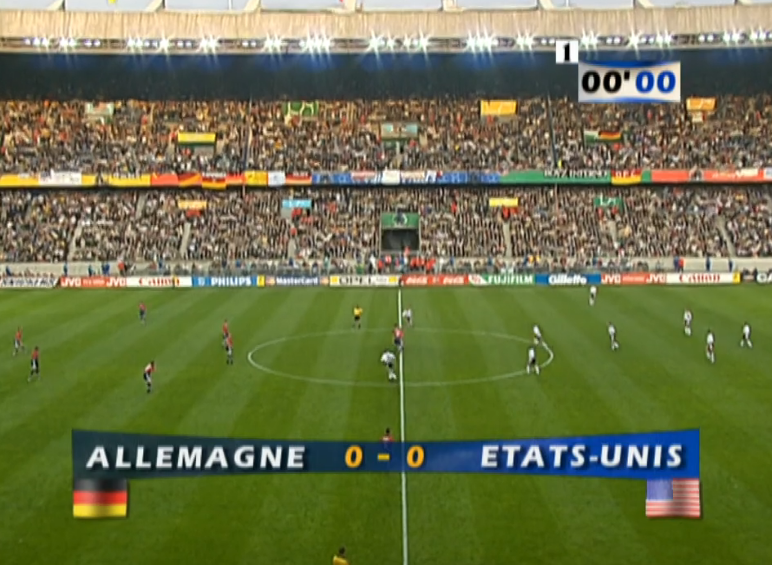
The first time I remember hearing anyone mention the World Cup soccer tournament was in 1994. I was hosting a party on a lovely summer afternoon, and two of the guests asked if I minded flipping on the TV so they could watch one of the games. Although I was annoyed (Who goes to someone else’s house and asks to watch TV???), I agreed … and then was intrigued as they explained this new-to-me sport.
By the time the next World Cup rolled around in 1998, a lot had changed. I’d moved halfway around the globe, from Ohio to Germany, and I had been to quite a few professional soccer games hosted by the local Bundesliga team, VfB Stuttgart. Not only did I understand why someone might ask to watch the game while at a party, but I was up for adventures like a spontaneous road trip to Paris to watch Germany play the U.S. We bought tickets from a scalper on the street and soaked up the fantastic atmosphere surrounding the international spectacle.
Fun fact: The game is available on the FIFA website!
〰️
Fun fact: The game is available on the FIFA website! 〰️
Fast forward to 2026, and I’m in another Midwestern state, Missouri, where it just so happens that half a dozen World Cup games will be played in Kansas City — which, coincidentally, is about the same driving distance from St. Louis as Paris is from Stuttgart. But this time I wasn’t planning to hit up a scalper for match tickets. I’ve been planning for years, attending U.S. Men’s and Women’s National Team games, signing up for FIFA emails so make sure I didn’t miss the random ticket draw signup.
But a lot has changed for the World Cup during the intervening years. For one thing, the tournament is much bigger, at 48 teams. In theory, this should make it easier to get tickets, as there are now more than 100 games spread across three host countries. Unfortunately, FIFA isn’t exactly the most benevolent organization in the universe, especially since consolidating its financial might in 2010. So I probably shouldn’t have been surprised that I didn’t get a single ticket for the random draw despite putting in applications for six different games in Kansas City.
I’m not the only one who was bummed about the ticket sales process. This article from a Planet Money writer breaks it down and offers suggestions on how it might be improved in the future.
Some of my friends bit the bullet and bought tickets on the resale market, where the cheapest seats were hundreds of dollars even for games without a lot of buzz, like Algeria vs. Austria. (Yeah, this is the kind of match-ups you get when 48 countries are allowed into the tournament.) I am considering attending some of the public viewing parties, or perhaps public practices if there are some, since several teams have made the Kansas City metro area their World Cup headquarters.
But this World Cup has been described by one longtime sports writer* as being devoid of joy due to global geopolitics and corruption. Travel to the U.S. is uncertain. Costs are high. Some of the countries set to field teams are at war with one another.
The travel podcast Unpacked by Afar recently had a fantastic episode about the history of the World Cup—written by someone who had discovered the tournament a couple of decades before I did, but his story about how it happened is also fun to listen to. On a less fun note, he goes into the grift behind some of FIFA’s decisions over the past two decades and explains why it will probably bring more of the same in coming years.
* Much as I want to support journalism, I also want to help people be informed on this topic, so here is a link to the unpaywalled full text.